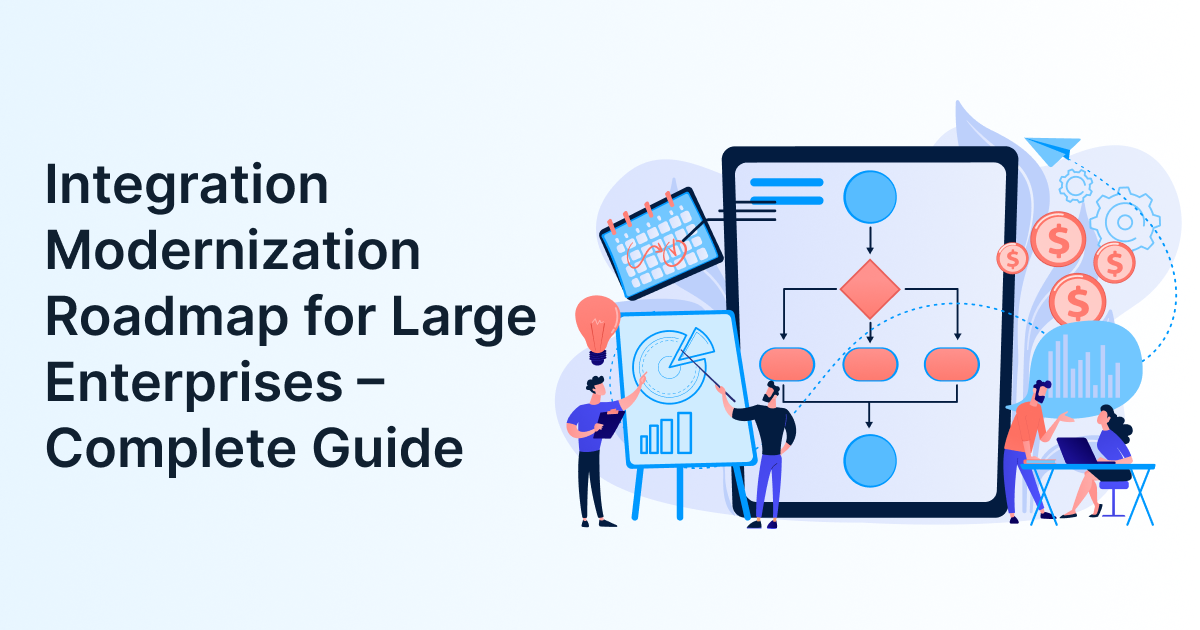
To build a future-ready enterprise ecosystem, you need Integration Modernization, a strategic approach that upgrades legacy integrations into API-driven, cloud-enabled architectures. It enables seamless connectivity, real-time data flow & scalable digital transformation using modern integration platforms and enterprise-grade solutions.
Large enterprises today operate across complex IT landscapes. Legacy Enterprise Application Integration (EAI) methods struggle to support cloud-native systems, real-time customer expectations & data-driven decision-making. This is where modern Enterprise Integration Architecture, integration platforms & API integration services come into play.
If you’re evaluating how to modernise your integration landscape, exploring enterprise-ready integration solutions can help you understand how scalable, API-first ecosystems are built for high-growth environments.
Drive Digital Innovation & Transform Your Business
Struggling to find tailored IT solutions that truly accelerate your digital transformation journey? Partner with LedgeSure to unlock the true potential of technology.
Why Is Integration Modernization Critical for Enterprises?
To stay competitive in a digital-first economy, you need Integration Modernization because it removes legacy bottlenecks and enables agile, scalable & real-time enterprise operations across systems and applications.
Here’s what makes it essential –
- Eliminates Data Silos – Legacy systems isolate data across departments. Modern integration connects everything into a unified flow, improving visibility and collaboration.
- Accelerates Innovation – With API-driven integration, development teams can deploy new features and services much faster.
- Improves Customer Experience – Real-time integration ensures faster transactions, personalised experiences & consistent service delivery across channels.
- Supports Cloud Transformation – Modern integration platforms enable seamless operation in hybrid and multi-cloud environments.
- Optimises Costs – Reduces manual work, maintenance costs & dependency on outdated systems.
| 💡 Did You Know?
“89% of organisations are actively using APIs in their integration strategies, making API-led connectivity a core driver of digital transformation, according to MuleSoft.” |
| Source: https://www.mulesoft.com/resources/research/api-connectivity-benchmark-report-2023 |
What Is Integration Modernization in Enterprise Context?
To understand Integration Modernization, you need to see it as the transition from monolithic, tightly coupled systems to flexible, modular & API-led integration ecosystems powered by modern enterprise technologies.
This transformation includes –
- API-first architecture – Exposing business capabilities via APIs for reuse across applications
- Adoption of integration platforms (iPaaS) – Centralised tools that simplify integration workflows
- Cloud-native connectivity – Enabling integration across SaaS, on-prem & hybrid systems
- Microservices enablement – Breaking large applications into manageable components
- Advanced integration software solutions – Automating, orchestrating & monitoring data flows
If you’re new to how these platforms work, this guide on how integration platforms connect applications, data & processes explains it clearly.
What Are the Key Components of an Integration Modernization Roadmap?
To successfully execute Integration Modernization, you need a structured roadmap that aligns business goals, technology decisions & execution strategy across enterprise systems.
-
Assess Your Existing Integration Landscape
Start by auditing your current Enterprise Integration Architecture:
- Identify legacy systems and dependencies
- Map data flows between applications
- Highlight integration bottlenecks
- Evaluate security and compliance gaps
-
Define Business and Technology Goals
Clearly align integration initiatives with business outcomes –
- Faster go-to-market
- Improved operational efficiency
- Better customer experiences
- Scalable and future-ready IT systems
-
Choose the Right Integration Platform
Modern integration platforms enable –
- Low-code or no-code development
- Faster deployment cycles
- Built-in governance and monitoring
- Seamless cloud integration
-
Implement API-led Integration
Adopt API integration services to –
- Enable real-time communication
- Create reusable business services
- Decouple systems for flexibility
-
Execute Phased Modernization
Avoid full-system replacement –
- Start with critical workflows
- Use hybrid integration during transition
- Gradually replace legacy components
-
Monitor, Optimise&Scale
Continuously improve –
- Track performance metrics
- Optimise integration flows
- Scale systems based on demand
How Do Enterprise Integration Solutions Support Modernization?
To effectively modernise, you need Enterprise Integration Solutions that provide the infrastructure, tools, and frameworks required to connect systems seamlessly and scale operations efficiently.
These solutions act as a backbone for transformation by –
- Connecting Diverse Systems: Integrate ERP, CRM, SaaS & custom applications into one ecosystem
- Automating Workflows: Reduce manual intervention through smart automation
- Improving Data Accuracy: Ensure consistent and real-time data synchronisation
- Enhancing Security: Provide built-in compliance and governance controls
- Enabling Scalability: Easily expand integration capabilities as business grows
Modern integration software solutions ensure businesses can evolve without completely disrupting existing operations.
What Are the Main Integration Approaches Enterprises Use?
To build an effective Integration Modernization strategy, you need to understand different integration models and choose the one that aligns with your business scale and complexity.
Comparison of Integration Approaches
| Approach | Description | Best Use Case | Flexibility | Scalability |
| Point-to-Point | Direct system connections | Small, simple systems | Low | Low |
| ESB (Enterprise Service Bus) | Centralised mediation layer | Legacy-heavy enterprises | Medium | Medium |
| API-led Integration | Modular, API-based connectivity | Agile enterprises | High | High |
| iPaaS (Integration Platform) | Cloud-based integration platform | Cloud-first organisations | Very High | Very High |
Modern enterprises increasingly prefer API-led and iPaaS integration platforms due to agility and faster deployment cycles.
How Can API Integration Services Accelerate Modernization?
To accelerate Integration Modernization, you need API integration services that enable fast, secure, and scalable communication between applications, systems & data sources.
Here’s how they drive transformation –
- Faster Development Cycles: Pre-built APIs reduce development time significantly
- Real-Time Data Exchange: Enables instant access to critical business information
- System Decoupling: Makes systems independent and easier to manage
- Reusability: APIs can be reused across projects, reducing duplication
- Improved Partner Integration: Easily connect with third-party platforms and services
What Role Do Integration Platforms Play in Enterprise Transformation?
To achieve scalable digital transformation, you need an integration platform that acts as the central nervous system of your enterprise, connecting applications, automating processes & ensuring seamless data movement.
Key capabilities include –
- Centralised Integration Management: Manage all integrations from one place
- Low-Code Development: Allow non-technical users to build workflows
- Hybrid Connectivity: Connect on-premise and cloud systems effortlessly
- Built-in Security & Governance: Ensure compliance and data protection
- Advanced Monitoring: Track performance and detect issues in real time
Many enterprises are moving towards low-code solutions for efficiency and speed. If you’re considering this approach, read about why enterprises choose low-code integration platforms.
What Challenges Do Enterprises Face in Integration Modernization?
To implement Integration Modernization successfully, you need to anticipate and address common challenges that can delay or disrupt transformation.
Key challenges include –
- Legacy Complexity: Older systems are often rigid and difficult to integrate
- High Initial Investment: Modern tools, migration & training require investment
- Data Migration Risks: Data inconsistencies can lead to operational disruptions
- Security & Compliance Issues: Integration increases the attack surface
- Skill Gaps: Limited expertise in modern integration technologies
However, these challenges can be mitigated by using scalable Enterprise Integration Architecture and trusted integration software solutions.
Key Statistics on Integration Modernization
“A McKinsey report state that companies adopting modern integration and digital transformation strategies see 20–30% improvement in operational efficiency.”
How to Build a Future-Ready Enterprise Integration Architecture?
To future-proof your organisation, you need a flexible Enterprise Integration Architecture that evolves with business needs and supports continuous innovation.
Best practices include –
- Adopt API-first design principles for consistency and scalability
- Use cloud-native integration platforms for flexibility
- Implement modular architectures for easier upgrades
- Enable real-time analytics for better decision-making
- Prioritise governance and security frameworks
This ensures your integration ecosystem can adapt to future technological advancements.
How Does Integration Modernization Impact Business Outcomes?
To drive measurable success, Integration Modernization must directly support business goals such as growth, customer satisfaction & operational efficiency.
Key benefits include –
- Faster Time-to-Market: Launch products and services quicker
- Improved Data Visibility: Gain insights across systems in real time
- Enhanced Customer Experience: Deliver seamless, connected interactions
- Operational Efficiency: Automate workflows and reduce errors
- Scalable Growth: Expand systems without major disruptions
Empower Your Workforce with AI & Automated Innovations
Want to boost efficiency and reduce costs? Explore how LedgeSure’s AI-driven solutions simplify workflows and drive real outcomes.
Conclusion
To succeed in a rapidly evolving digital landscape, enterprises must prioritise Integration Modernization as a core strategy rather than a one-time initiative. By adopting API-first architectures, leveraging robust integration platforms, and implementing scalable Enterprise Integration Solutions, businesses can unlock true agility and innovation.
If you’re looking to build or modernise your enterprise integration ecosystem, working with experts can make the transition seamless and future-ready. Explore tailored solutions or get started.
Key Takeaways
- Integration modernization is critical for enterprise scalability and agility
- API-led integration and integration platforms are industry standards
- Enterprise integration solutions reduce complexity and enhance performance
- A phased roadmap minimises risk and ensures smooth transition
- Continuous optimisation is key to long-term success
Challenges include legacy system complexity, high costs, data migration risks & security concerns. However, these can be managed with the right tools, strategy & expertise.