Introduction
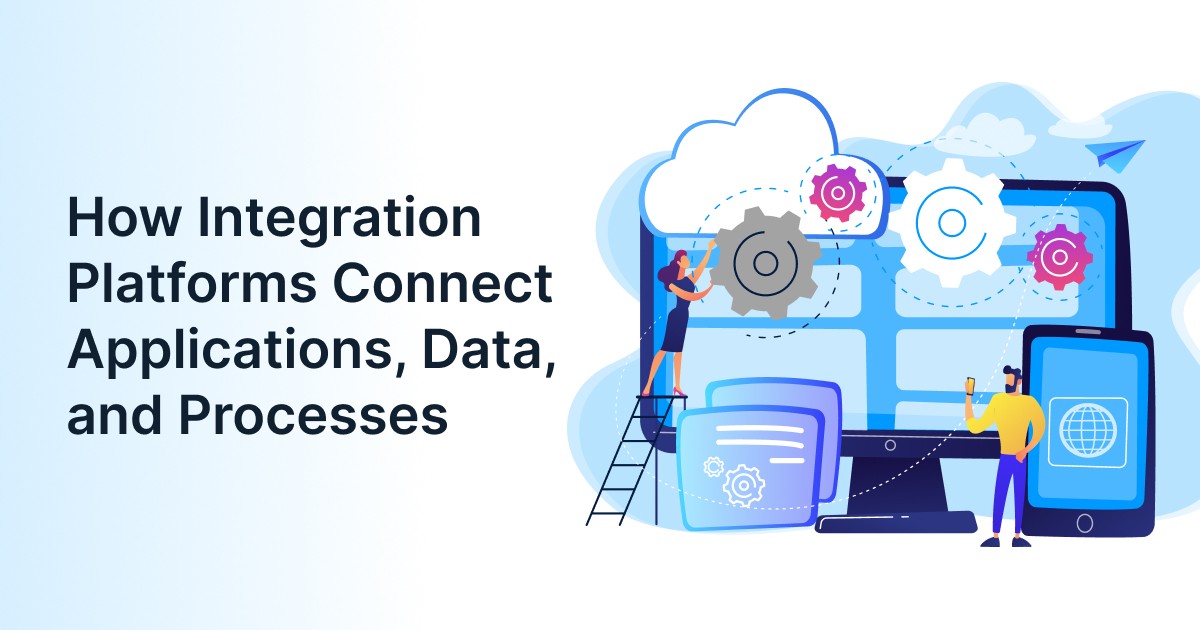
Integration platforms connect applications, data & processes by enabling systems to communicate through APIs, automation & cloud technologies. They eliminate silos, allow real-time data flow & streamline operations, helping businesses improve efficiency, scalability & decision-making across departments.
In today’s digitally driven environment, businesses rely on a growing ecosystem of tools, CRMs, ERPs, analytics dashboards & SaaS applications. Without proper application integration and robust data integration solutions, these systems function in isolation, slowing down workflows and creating inconsistencies.
This is where modern integration platforms step in. Acting as a central bridge, they bring together disparate systems and ensure seamless interaction. Organisations adopting advanced integration software solutions and API integration services are better positioned to simplify operations, improve visibility & scale faster.
If you’re exploring end-to-end integration capabilities, businesses often begin with comprehensive integration solutions to unify their systems early in their digital transformation journey.
Quick Summary
- Integration platforms unify apps, data & processes into one ecosystem
- They rely heavily on API integration services and cloud infrastructure
- Enable real-time data exchange and workflow automation
- Reduce inefficiencies caused by disconnected systems
- Essential for scaling modern digital businesses
Drive Digital Innovation & Transform Your Business
Struggling to find tailored IT solutions that truly accelerate your digital transformation journey? Partner with LedgeSure to unlock the true potential of technology.
What Are Integration Platforms and Why Do They Matter?
To streamline business operations, you need an integration platform that centralises how applications, data & processes communicate. It removes system silos, improves data accuracy & enables automated workflows across departments.
An integration platform acts as the backbone of your IT ecosystem. Instead of relying on fragmented, point-to-point integrations, businesses can use a single, scalable platform that manages everything, from application integration to data synchronisation.
Why do they matter in real business scenarios?
- Eliminating data silos –
When departments operate on disconnected systems, data becomes inconsistent. Integration platforms ensure all teams access a unified data source, improving collaboration.
- Enabling real-time insights –
Instead of waiting for manual updates, integrated systems sync data instantly, allowing faster and more informed decision-making.
- Reducing manual processes –
Repetitive tasks like data entry are automated, reducing errors and freeing up valuable employee time.
- Supporting scalability –
As your business grows, integration platforms allow you to add new tools without disrupting existing workflows.
For a deeper understanding of why this matters in growth strategies, many organisations explore how integration impacts scalability and efficiency.
How Do Integration Platforms Connect Applications?
To connect applications efficiently, you need integration platforms that use APIs, connectors & middleware to enable seamless communication between systems without manual intervention.
Businesses often juggle multiple applications that weren’t designed to work together. This is where API integration solutions and integration software solutions make a significant difference.
How does this work in practice?
- API integration solutions –
APIs act as messengers between systems. For example, when a customer updates their profile in a CRM, APIs instantly reflect that change in billing or marketing tools.
- Pre-built connectors –
These are ready-to-use integrations for platforms like Salesforce or Shopify, drastically reducing deployment time.
- Middleware layers –
Middleware ensures compatibility between legacy and modern systems, allowing older infrastructure to function alongside new tools.
These approaches are often delivered through modern api integration services, which enterprises rely on for faster and more secure connectivity.
For practical enterprise use cases, this guide on modern api integration services explains how organisations are implementing these solutions at scale.
How Do Integration Platforms Enable Data Integration Solutions?
To make data usable and reliable, integration platforms bring together data from multiple sources, transform it into a consistent format & ensure real-time accessibility across systems.
Data is often spread across CRMs, databases, spreadsheets & cloud apps. Without effective data integration solutions, this leads to inconsistencies and reporting errors.
What happens during data integration?
- Data extraction –
Information is pulled from multiple systems such as ERP, CRM, or third-party applications.
- Data transformation –
The data is cleaned, formatted & standardised to remove duplicates or inconsistencies.
- Data synchronisation –
Updated data is continuously aligned across systems to maintain accuracy.
Why this matters?
- Businesses gain a single source of truth
- Analytics become more reliable
- Decision-making improves significantly
|
Industry Stat: “According to Statista, global data creation is expected to reach 181 zettabytes by 2025, making data integration essential for handling scale.” |
| Source: https://www.statista.com/statistics/871513/worldwide-data-created/ |
What Role Do API Integration Solutions Play?
To enable real-time system communication, API integration solutions allow applications to exchange data instantly using secure and standardised protocols.
APIs are at the heart of every modern integration platform. Without them, real-time connectivity and automation simply wouldn’t exist.
Why are APIs so critical?
- Real-time communication: Systems can instantly share updates, improving user experience.
- Faster deployment: APIs reduce development time compared to traditional integration methods.
- Flexibility: Businesses can easily integrate new tools without overhauling their entire system.
| 💡 Did You Know?
“APIs handle over 80% of web traffic today, highlighting their critical role in modern integration ecosystems.” |
| Source: https://www.mulesoft.com/resources/api/what-is-an-api |
This is why organisations increasingly invest in scalable api integration services within their broader integration platform strategy.
Why Are Cloud Integration Platforms Becoming the Standard?
To support modern, distributed systems, you need cloud integration platforms that provide scalability, flexibility & seamless connectivity between cloud and on-premises environments.
As businesses adopt SaaS tools and remote operations, cloud integration platforms have become essential.
What makes them valuable?
- Scalability on demand: Businesses can expand integrations without infrastructure limitations.
- Lower operational costs: No need for heavy hardware investments.
- Faster implementation: Cloud-based solutions deploy much quicker than traditional systems.
- Accessibility: Teams can access integrated systems from anywhere.
Many businesses are now choosing low-code integration platform approaches to accelerate deployment and reduce technical dependency.
Integration Platform vs Traditional Integration Methods
| Feature | Integration Platforms | Traditional Methods |
| Scalability | Easily scalable with business growth | Limited scalability |
| Deployment Speed | Rapid deployment using APIs | Time-consuming |
| Flexibility | Highly adaptable systems | Rigid architecture |
| Maintenance | Centralised and efficient | Complex and fragmented |
| Cost Efficiency | Lower long-term costs | High maintenance costs |
How Do Integration Platforms Improve Business Processes?
To optimise business workflows, integration platforms automate repetitive tasks, connect systems & ensure consistent data flow across departments.
What improvements can businesses expect?
- Workflow automation:
Tasks like invoice processing or lead management are handled automatically, reducing turnaround time.
- Reduced redundancy:
Eliminates duplicate data entries across systems.
- Better collaboration:
Teams work with the same real-time data, improving coordination.
- Faster decisions:
Leaders get accurate insights instantly instead of waiting for reports.
What Are the Core Components of Integration Platforms?
To function effectively, integration platforms rely on APIs, connectors, data transformation tools & workflow engines that collectively enable seamless system communication.
Key components:
- API management: Controls how systems communicate securely.
- Data mapping tools: Ensure data from different systems aligns correctly.
- Workflow engines: Automate multi-step processes across applications.
- Monitoring dashboards: Provide visibility into integration performance and errors.
These components are essential in delivering scalable integration software solutions.
Empower Your Workforce with AI & Automated Innovations
Want to boost efficiency and reduce costs? Explore how LedgeSure’s AI-driven solutions simplify workflows and drive real outcomes.
What Are the Benefits of Integration Software Solutions?
To simplify IT complexity, integration software solutions provide a unified approach to connecting systems, improving efficiency & reducing operational overhead.
Key benefits:
- Centralised management: All integrations are controlled from a single platform, improving governance.
- Reduced IT burden: Less need for custom coding and maintenance.
- Cost efficiency: Long-term operational costs decrease due to automation.
- Improved compliance: Better control over data flow ensures regulatory adherence.
Conclusion
Integration platforms are no longer optional; they are foundational for businesses looking to scale efficiently. By enabling seamless application integration, reliable data integration solutions & powerful API integration solutions, they transform how organisations operate.
Whether you’re modernising legacy systems or building a cloud-first strategy, investing in the right integration platform can unlock agility, efficiency & innovation.
If you’re looking to implement scalable integration software solutions or enhance your existing ecosystem, you can explore tailored strategies or get in touch with our experts today.