Introduction
To achieve scalable and sustainable growth in 2026, organisations need robust Integration Solutions that connect applications, data & workflows into a unified ecosystem. From API integration to enterprise-grade business integration solutions, these systems eliminate silos and enable faster, data-driven decisions across increasingly complex IT environments.
As companies adopt multiple cloud tools and platforms, disconnected systems become one of the biggest barriers to growth. Modern enterprises rely on integration services, advanced integration platforms & automation to streamline operations and deliver consistent customer experiences.
If you’re planning a connected enterprise strategy, starting with the right Integration Solutions helps ensure your systems grow together, without friction or inefficiencies.
Summary
- Integration connects systems for real-time data and efficiency
- API integration is the backbone of modern digital ecosystems
- Integration platforms simplify complexity and scale operations
- Businesses without integration face silos, delays & higher costs
- It’s a critical driver for innovation, agility & customer experience
Drive Digital Innovation & Transform Your Business
Struggling to find tailored IT solutions that truly accelerate your digital transformation journey? Partner with LedgeSure to unlock the true potential of technology.
Why Are Integration Solutions Essential for Business Growth in 2026?
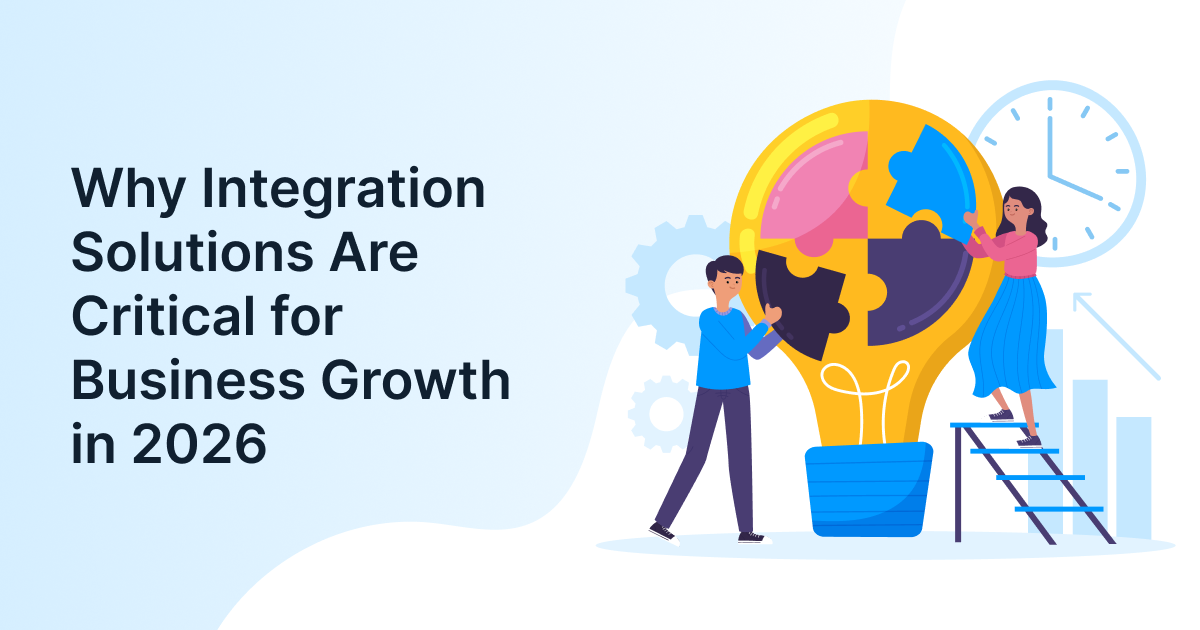
To scale efficiently and compete in digital-first markets, you need integration solutions that unify data, systems & processes across your organisation. Without integration, businesses operate in silos, leading to inefficiencies, inconsistent data & slower innovation cycles.
What slows growth without integration?
- Fragmented data visibility: Important insights are scattered across CRM, ERP & analytics tools, making strategic decisions slower and less accurate
- Operational inefficiency: Teams manually transfer and reconcile data between systems, wasting valuable time
- Customer experience gaps: Disconnected systems lead to inconsistent communication and service delivery
- Reduced innovation speed: IT teams spend more time fixing integrations than building new capabilities
How integration solutions enable growth –
- Unified data ecosystem: Real-time synchronisation ensures every team works with the same accurate information
- Process automation: From lead generation to billing, workflows run seamlessly without manual intervention
- Faster innovation cycles: Teams can build and deploy new services quickly using existing integrated systems
- Scalable operations: Businesses can grow without worrying about system limitations
This is why companies are increasingly adopting integration software solutions to stay agile and competitive.
What Are Integration Solutions and How Do They Work?
To connect multiple applications and ensure smooth data flow, you need integration solutions that use APIs, middleware & integration platforms as a bridge between systems. These technologies allow businesses to create a unified digital ecosystem without replacing existing tools.
Key components –
- API integration services: APIs act as connectors that allow systems (CRM, ERP, SaaS apps) to communicate instantly. For example, when a customer places an order, APIs ensure that inventory, billing & CRM systems update simultaneously
- Middleware layer: Acts as a translator between legacy systems and modern applications, ensuring compatibility without costly rebuilds
- Integration platform: A centralised hub that manages workflows, data pipelines & API orchestration
- Automation engines: Handle repetitive processes such as syncing customer data or triggering notifications
This is exactly why modern businesses are shifting toward scalable integration platforms rather than relying on one-off connections.
How Does API Integration Drive Digital Transformation?
To enable real-time system communication and scalability, you need API integration services that connect applications securely and efficiently. APIs are the backbone of digital ecosystems, allowing businesses to innovate faster and scale effortlessly.
How API integration impacts business transformation –
- Real-time connectivity: Systems update instantly, ensuring decisions are based on current data
- Faster product development: Developers can reuse APIs instead of building from scratch
- Seamless third-party integration: Payment gateways, logistics & analytics tools can be plugged in easily
- Improved scalability: Businesses can expand services without overhauling infrastructure
For example, security is becoming a major concern with growing API usage, this is explained in detail in this blog on API gateway security, which highlights how organisations are strengthening API layers in modern architectures.
| 💡 Did You Know?
“Less than 30% of digital transformation initiatives succeed, often due to poor integration of systems and processes.” |
| Source: https://www.mckinsey.com/capabilities/people-and-organizational-performance/our-insights/unlocking-success-in-digital-transformations |
What Role Do Integration Platforms Play in Modern Enterprises?
To manage complex ecosystems efficiently, you need an integration platform that centralises APIs, workflows & data connections into a single system. These platforms provide visibility, control & scalability across the entire organisation.
Why integration platforms are essential –
- Centralised management: Instead of managing hundreds of point-to-point integrations, everything is controlled from a single interface
- Reduced IT dependency: Low-code tools allow non-technical teams to build workflows
- Real-time monitoring: Businesses can identify failures or bottlenecks immediately
- Scalable architecture: Easily supports growth without re-engineering systems
This is also why businesses exploring workflow automation often combine integration with process tools, as discussed in this BPM software integration guide.
| Key Industry Statistic
“Integration is becoming central to enterprise strategy, as organisations shift towards connected systems, APIs & cloud-first architectures to support digital operations. Industry research indicates that integration complexity is one of the top barriers to digital transformation success.” |
| Source: https://www.ibm.com/topics/digital-transformation |
Why Is Integration Critical for Composable Architecture?
To build flexible, future-ready systems, you need API integration that supports composable architecture, where applications are built using modular components that can be independently updated or replaced.
Why this approach matters –
- Faster innovation cycles: Teams can upgrade individual components without affecting the entire system
- Greater flexibility: Businesses can quickly adapt to market changes
- Cost optimisation: Replace only what’s needed instead of rebuilding entire systems
- Improved performance: Modular systems can be optimised at a granular level
This shift towards modular systems is explored further in this blog on the future of composable architecture.
Integration Solutions vs Traditional Systems
| Feature | Traditional Systems | Integration Solutions |
| Data Flow | Delayed, batch-based | Real-time synchronisation |
| Flexibility | Rigid | Highly adaptable |
| Automation | Minimal | Extensive automation |
| Scalability | Limited | Built for growth |
| Business Impact | Slower decisions | Faster innovation |
What Are the Key Benefits of Integration Solutions in 2026?
To remain competitive and future-ready, you need integration solutions that improve efficiency, agility & customer experience across your organisation. These benefits go beyond operational gains, they directly impact growth, profitability & market responsiveness.
-
Real-Time Decision-Making
With integrated systems, data flows continuously across platforms, allowing leaders to access accurate, up-to-date insights. This means decisions are based on real-time performance rather than outdated reports, reducing risks and improving responsiveness to market changes.
-
Enhanced Customer Experience
Integration ensures that customer data, preferences, history & interactions, is unified across systems. This allows businesses to deliver personalised, consistent experiences across channels, whether it’s sales, support, or marketing.
-
Increased Business Agility
When systems are interconnected, businesses can quickly launch new services, integrate new tools, or adapt processes without major disruptions. This agility is critical in 2026, where market changes happen rapidly.
-
Cost Optimisation
Integration reduces duplicated work and manual processes, lowering operational costs. It also maximises the value of existing systems by connecting them instead of replacing them entirely.
-
Improved Security and Compliance
Modern integration platforms include built-in governance, access controls & monitoring tools. This ensures sensitive data is protected while maintaining compliance with industry regulations.
What Trends Are Shaping Integration Solutions in 2026?
To stay ahead in a rapidly evolving digital landscape, you need to align your strategy with emerging integration trends that are redefining enterprise IT.
Empower Your Workforce with AI & Automated Innovations
Want to boost efficiency and reduce costs? Explore how LedgeSure’s AI-driven solutions simplify workflows and drive real outcomes.
Key trends –
- AI-powered integration: Automates workflows and predicts system failures before they occur
- Cloud-native integration platforms: Offer scalability and global accessibility
- API-first approach: APIs are treated as core business assets
- Hyper automation: Combines AI, RPA & API integration services for end-to-end automation
- Security-first integration: Increased focus on API governance and compliance
How to Choose the Right Integration Software Solutions?
To implement a successful strategy, you need integration software solutions that align with both business and technical requirements.
What to evaluate –
- Scalability to support long-term growth
- Ease of implementation with low-code capabilities
- Strong API management features
- Security and compliance readiness
- Vendor expertise and support
Conclusion
In 2026, business success depends on how well your systems work together. Investing in advanced integration solutions enables seamless operations, faster decision-making & superior customer experiences.
Whether you’re scaling operations or modernising infrastructure, the right integration strategy can unlock significant growth opportunities. Ready to build a connected enterprise? Get in touch with experts today.