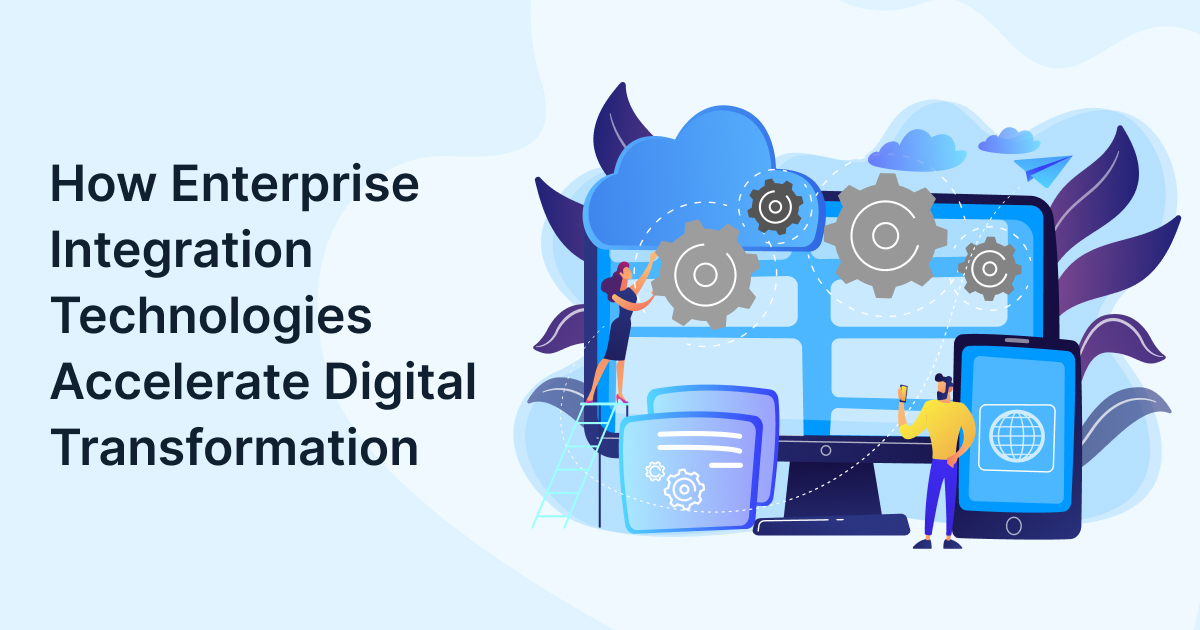
Enterprise integration technologies accelerate digital transformation by connecting applications, data & business processes across the organisation. They eliminate silos, enable real-time information flow, improve operational efficiency, and create the foundation needed for scalable growth, automation & informed decision-making in an increasingly digital business environment.
Digital transformation is no longer limited to adopting new software or migrating workloads to the cloud. True transformation happens when systems, people, processes, and data work together seamlessly. Yet many organisations continue to struggle with disconnected applications, fragmented data sources & manual workflows that slow innovation.
This is where enterprise integration technologies play a crucial role. By connecting systems across on-premise and cloud environments, businesses can create a unified ecosystem that supports faster operations, better customer experiences, and improved business agility. Organisations seeking specialised integration engineering services often begin their transformation journey by addressing these integration challenges and creating a scalable connectivity framework.
What Are Enterprise Integration Technologies?
Enterprise integration technologies are tools, platforms, and frameworks that enable systems, applications & data sources to communicate and share information across an organisation. Their primary purpose is to eliminate silos and create connected business operations.
Modern enterprises often use dozens or even hundreds of applications. Without a structured approach, information becomes fragmented across departments, creating inefficiencies and inconsistencies.
Enterprise integration technologies help organisations –
- Connect cloud and on-premise applications
- Synchronise data across systems
- Automate workflows
- Support real-time decision-making
- Improve operational visibility
Businesses looking for a broader understanding of integration frameworks and connectivity strategies often explore Enterprise Integration Services: The Complete Guide to Connecting Systems, Data & Applications as a foundational resource for building connected ecosystems.
At their core, these technologies enable organisations to transform scattered systems into a cohesive digital environment.

Why Are Enterprise Integration Technologies Essential for Digital Transformation?
To achieve successful digital transformation, organisations need seamless connectivity between their systems, data, and processes. Enterprise integration technologies provide this connectivity and ensure technology investments deliver measurable business outcomes.
Digital transformation initiatives frequently fail when data remains trapped in disconnected systems. When information cannot move efficiently between departments, organisations face operational delays, poor visibility & inconsistent customer experiences.
Enterprise integration directly supports digital transformation by –
Enabling Real-Time Data Access
Integrated environments create a single source of truth, allowing teams to access accurate information when they need it.
Improving Customer Experience
Connected systems ensure customer data flows seamlessly across sales, service, marketing, and support functions.
Supporting Business Agility
Integrated environments allow organisations to adapt quickly to changing market conditions and evolving customer expectations.
Increasing Operational Efficiency
Automation reduces manual data entry and repetitive tasks while improving process consistency.
Which Enterprise Integration Technologies Are Most Common Today?
Modern enterprise integration relies on a combination of APIs, middleware, data integration platforms, and cloud-based integration solutions. The right technology depends on organisational goals, infrastructure, and scalability requirements.
| Technology | Primary Purpose | Best Use Case |
| APIs | Application connectivity | Real-time integrations |
| EAI Integration Platforms | Internal system integration | Enterprise environments |
| Middleware | System communication | Legacy infrastructure |
| iPaaS | Cloud integration | Hybrid ecosystems |
| Data Integration Platforms | Data consolidation | Analytics initiatives |
| Event-Driven Architecture | Real-time responsiveness | Large-scale enterprises |
APIs
APIs have become the backbone of modern business integration. They enable systems to exchange information quickly and securely while supporting scalability and flexibility.
EAI Integration
Enterprise Application Integration (EAI) focuses on connecting internal business applications to improve data consistency and workflow automation.
Middleware
Middleware acts as an intermediary layer that facilitates communication between different systems. Organisations still relying on legacy infrastructure often utilise middleware to bridge technology gaps. Businesses seeking deeper insights into this area can explore this guide on enterprise integration middleware solutions.
iPaaS
Integration Platform as a Service (iPaaS) solutions simplify integration by providing cloud-based tools for application connectivity and workflow automation.
How Do Enterprise Integration Technologies Improve Business Agility?
Enterprise integration technologies improve business agility by enabling faster information exchange, automating workflows, and providing real-time visibility across operations. This allows organisations to respond to opportunities and challenges more effectively.
Agility has become a competitive necessity. Organisations that can quickly adapt to new customer expectations, regulatory requirements, and market changes often outperform slower competitors.
Key ways to support agility include –
- Faster Decision-Making
Real-time access to integrated data enables leadership teams to make informed decisions quickly.
- Workflow Automation
Integrated systems reduce manual processes and accelerate operational activities.
- Improved Collaboration
Departments can access shared information rather than operating in isolated environments.
- Scalable Growth
As organisations expand, integrated environments allow new systems and services to be incorporated without significant disruption.
A critical step in achieving agility is building a robust connected enterprise data ecosystem that supports data-driven decision-making across the organisation.
What Enterprise Integration Patterns Drive Business Agility?
Choosing the right integration pattern helps organisations balance performance, scalability, governance & operational efficiency. Different business needs require different approaches to integration.
Some of the most common integration patterns include –
- Point-to-Point Integration
Suitable for simple environments but can become difficult to manage at scale.
- Hub-and-Spoke Integration
Provides centralised control and simplifies management.
- API-Led Connectivity
Promotes reusable services and scalable integration architectures.
- Event-Driven Integration
Supports real-time communication between applications and services.
Businesses evaluating modern connectivity strategies often benefit from understanding various integration patterns for business operations to determine the best fit for their environment.
What Challenges Can Businesses Face During Enterprise Integration?
It can be complex due to legacy systems, inconsistent data, security concerns, and governance requirements. Successful projects require planning, standardisation & ongoing management.
Common challenges include –
- Legacy Infrastructure
Older systems may lack modern integration capabilities.
- Data Silos
Information scattered across different platforms creates consistency and accessibility issues.
- Security Risks
Integration increases data movement, making strong security controls essential.
- Governance Complexity
Without clear standards, integrations can become difficult to manage and maintain.
- Scalability Issues
Poorly designed integration architectures may struggle to support business growth.
Many organisations encounter these common enterprise integration challenges and benefit from structured strategies to address them effectively.
How Is AI Transforming Modern Enterprise Integration?
AI is transforming enterprise integration by automating complex processes, improving data mapping, enhancing monitoring capabilities & accelerating implementation timelines. This evolution is creating more intelligent and adaptive integration environments.
The rise of integration AI is changing how organisations connect and manage systems. Key applications include –
- Intelligent Data Mapping
AI can automatically identify relationships between data structures, reducing manual effort.
- Automated Workflow Optimisation
Machine learning models help identify inefficiencies and recommend process improvements.
- Predictive Monitoring
AI-powered platforms can detect integration issues before they impact operations.
- Intelligent Automation
Organisations are increasingly combining enterprise integration technologies with intelligent automation to create self-optimising workflows.
As AI capabilities continue to mature, integration platforms are becoming more proactive, adaptive, and capable of supporting increasingly complex digital ecosystems.
What Best Practices Should Businesses Follow for Successful Enterprise Integration?
Successful integration requires a clear strategy, strong governance, scalable technology choices, and continuous performance monitoring. Organisations that prioritise these areas are more likely to achieve long-term success.
Best practices include –
- Start with Business Objectives
Technology decisions should align with organisational goals.
- Adopt an API-First Mindset
APIs support flexibility, scalability, and reuse across multiple integration initiatives.
- Prioritise Data Quality
Reliable integrations depend on consistent and accurate data.
- Establish Governance Frameworks
Standards improve security, compliance, and maintainability.
- Plan for Scalability
Integration strategies should accommodate future growth.
Organisations building long-term integration frameworks can benefit from understanding modern enterprise integration architecture best practices to ensure resilience and scalability.
What Does the Future of Enterprise Integration Look Like?
The future of enterprise integration will be shaped by AI, composable architectures, event-driven systems, and increasingly connected digital ecosystems. Organisations that invest in modern integration capabilities will be better positioned for long-term innovation.
Several trends are influencing the next generation of integration –
- AI-powered integration platforms
- Composable enterprise architecture
- Event-driven ecosystems
- Hybrid and multi-cloud integration
- Data fabric frameworks
- API-led business ecosystems
As digital transformation initiatives continue to evolve, enterprise integration technologies will remain a foundational component of business success.

Key Takeaways
- Enterprise integration technologies serve as the backbone of digital transformation initiatives.
- Connected systems improve efficiency, collaboration, and decision-making.
- APIs, middleware, EAI integration platforms, and iPaaS solutions remain key technologies.
- Integration AI is driving the next generation of intelligent automation.
- Successful business integration requires a strategic and scalable approach.
- Future-ready organisations prioritise connectivity as a core business capability.
Conclusion
Digital transformation succeeds when technology, data & business processes operate as a cohesive ecosystem. Enterprise integration technologies provide the connectivity needed to eliminate silos, improve agility, and enable innovation at scale.
Whether your organisation is modernising legacy infrastructure, implementing cloud solutions, or pursuing intelligent automation, a strong integration strategy can significantly accelerate business outcomes.
Ready to build a connected enterprise? Get in touch with the Ledgesure team to explore integration solutions that support your digital transformation goals.
FAQs
What are enterprise integration technologies?
Enterprise integration technologies are tools and platforms that connect applications, systems, and data across an organisation. They help eliminate silos, improve operational efficiency, enable automation, and support digital transformation initiatives by creating seamless information flow.
Why is enterprise integration important for digital transformation?
It enables data and processes to move seamlessly across systems. Without integration, organisations often face siloed information, inefficient workflows, and limited visibility, all of which can slow digital transformation efforts.
What is EAI integration?
EAI integration, or Enterprise Application Integration, refers to the process of connecting different business applications so they can exchange data and work together efficiently. It helps improve consistency, automation, and operational performance.
How does AI support enterprise integration?
AI helps automate data mapping, optimise workflows, detect anomalies, and improve monitoring capabilities. Integration AI solutions can reduce implementation complexity and improve the overall performance of integration ecosystems.
What are the most common enterprise integration technologies?
The most common technologies include APIs, middleware, EAI integration platforms, iPaaS solutions, data integration platforms & event-driven architectures. Each serves different integration requirements depending on business objectives.
What challenges are common in enterprise integration projects?
Common challenges include legacy systems, data silos, security concerns, governance complexity, and scalability issues. Organisations can overcome these challenges through careful planning and modern integration frameworks.
How does enterprise integration improve business agility?
It provides real-time access to information, automates processes, and improves collaboration across teams. These capabilities help organisations respond faster to changing business conditions and customer expectations.
How can businesses choose the right integration strategy?
Businesses should assess their existing systems, identify integration goals, evaluate scalability requirements, and select technologies that align with long-term business objectives. Governance and security considerations should also be included in strategy planning.