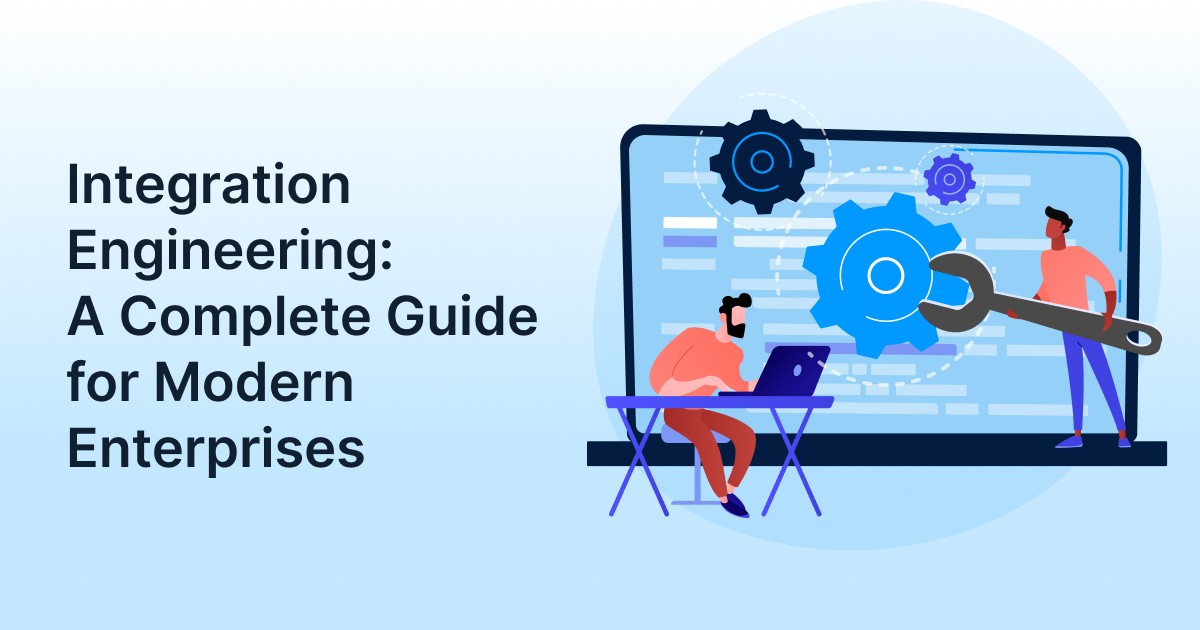
Integration engineering enables organisations to connect systems, data & applications seamlessly using a structured approach to enterprise integration. It combines integration architecture, tools & frameworks to improve efficiency, scalability & automation across business processes in modern enterprises.
In today’s digital-first landscape, enterprises rely on multiple applications, platforms & data sources to operate efficiently. However, disconnected systems create inefficiencies, data silos & operational delays. This is where Integration Engineering plays a critical role. It helps organisations implement scalable enterprise integration solutions while driving integration modernization and integration automation across workflows.
For businesses looking to streamline connectivity, explore integration solutions that align with modern enterprise needs.
Drive Digital Innovation & Transform Your Business
Struggling to find tailored IT solutions that truly accelerate your digital transformation journey? Partner with LedgeSure to unlock the true potential of technology.
What Is Integration Engineering and Why Does It Matter?
To understand integration engineering, you need to see it as a discipline that designs, builds & manages connections between systems, applications, and data workflows. It ensures seamless communication across enterprise platforms while supporting scalability and real-time operations.
Integration engineering matters because organisations operate across diverse ecosystems. Cloud platforms, legacy systems, SaaS tools, APIs & databases. Without a structured approach to enterprise integration, businesses face inefficiencies such as –
- Data duplication and inconsistencies
- Delayed decision-making due to poor data visibility
- Increased operational costs
- Limited scalability in digital transformation initiatives
By implementing integration automation and integration modernization, organisations can –
- Enable real-time data exchange
- Improve customer experiences
- Enhance operational efficiency
- Accelerate innovation
For a deeper understanding of its role in transformation, you can explore how integration engineering supports digital transformation.
How Does Integration Architecture Support Enterprise Integration?
To achieve scalable enterprise integration, you need a robust integration architecture that defines how systems communicate and share data across platforms. It acts as the blueprint for designing and implementing integration solutions effectively.
A well-designed integration architecture includes –
-
API-Led Integration
APIs allow systems to communicate in a standardised manner. API-led architecture enables modular and reusable integrations, supporting rapid development.
-
Middleware and Integration Platforms
Middleware solutions act as intermediaries between systems, handling communication, transformation & orchestration of data.
-
Event-Driven Architecture
This approach enables real-time integration by reacting to events such as transactions or user actions, supporting dynamic workflows.
-
Data Integration Layer
Ensures consistent and synchronised data flow across systems, supporting analytics, reporting & decision-making.
-
Security and Compliance
Integration architecture must include authentication, authorisation & encryption mechanisms to ensure safe data exchange.
What Is an Integration Engineering Framework?
To build reliable enterprise systems, you need an integration engineering framework that standardises processes, tools & methodologies for integrating applications and data.
An effective integration engineering framework consists of –
- Design principles: Standard approaches for building scalable integrations
- Tools and platforms: Integration platforms, APIs & middleware
- Governance policies: Rules for monitoring, managing & optimising integrations
- Automation capabilities: Using integration automation to reduce manual efforts
- Monitoring & analytics: Tracking performance and identifying bottlenecks
Frameworks ensure consistency, minimise risks & accelerate integration modernization, making them essential for growing enterprises.
Why Is Integration Modernization Critical for Enterprises?
To stay competitive, enterprises must modernise legacy systems and adopt modern integration approaches that support scalability, cloud adoption & real-time operations.
Legacy systems often lack flexibility, making it difficult to integrate with modern applications. Integration modernization solves this by –
- Replacing outdated systems with scalable architectures
- Moving from point-to-point integrations to API-driven models
- Enabling cloud-native integrations
- Supporting digital transformation initiatives
Avoid common pitfalls by reading integration modernization mistakes and how to avoid them.
Key Approaches to Enterprise Integration Solutions
To implement effective integration engineering, organisations can adopt several integration approaches depending on their infrastructure and business needs.
| Approach | Description | Best Use Case |
| Point-to-Point Integration | Direct connection between systems | Small-scale integration |
| Middleware Integration | Centralised platform managing communication | Medium to large enterprises |
| API-Led Integration | Modular and reusable APIs | Cloud-native environments |
| Event-Driven Integration | Real-time event-based communication | High-frequency data systems |
| Hybrid Integration | Combines on-premise and cloud integration | Enterprises with legacy systems |
Each approach contributes to integration automation and supports scalable enterprise integration solutions.
What Are the Benefits of Integration Engineering?
To fully leverage integration engineering, organisations need to focus on the measurable benefits it delivers across processes, operations & customer experiences.
-
Improved Operational Efficiency
Automation reduces manual tasks, enabling faster and more accurate workflows.
-
Enhanced Data Visibility
Centralised data integration ensures real-time insights and analytics.
-
Scalability and Flexibility
Modern integration architectures support business growth and expansion.
-
Cost Optimisation
Automation and streamlined processes reduce operational expenses.
-
Faster Time-to-Market
Integrated systems allow businesses to launch products and services more quickly.
Industry Insight and Statistics
“According to Markets and Markets report, the application integration market size is projected to grow from $15.1 billion in 2023 to $41.5 billion by 2028, driven by demand for digital transformation and integration automation.”
These insights highlight the growing importance of enterprise integration, integration engineering frameworks & integration modernization strategies.
How Integration Automation Transforms Business Processes
To optimise business processes, organisations need integration automation that streamlines workflows, reduces errors & enhances operational efficiency.
Integration automation plays a critical role by –
- Automating repetitive tasks such as data transfer and validation
- Reducing manual intervention and human errors
- Improving process consistency
- Enabling real-time decision-making
In modern enterprises, automation is a key component of enterprise integration solutions, ensuring faster and more reliable operations.
How Do Integration Platforms Connect Applications, Data, and Processes?
To connect applications effectively, enterprises rely on integration platforms that provide tools for designing, managing, and monitoring integrations across systems.
Integration platforms help by –
- Providing pre-built connectors for applications
- Supporting API management and orchestration
- Enabling real-time and batch data processing
- Offering monitoring and analytics capabilities
For more insights, explore how integration platforms connect applications, data, and processes.
Challenges in Integration Engineering (and How to Overcome Them)
To implement effective integration engineering, organisations need to address technical, data & operational challenges with a structured integration architecture and automation-driven approach. Overcoming these ensures smoother enterprise integration and long-term scalability.
While integration engineering enables seamless connectivity, enterprises often face several challenges that can slow down implementation and impact performance.
-
Legacy Systems and Compatibility Issues
Many organisations still operate on outdated systems that are not compatible with modern APIs or cloud-based platforms, making integration modernization difficult.
Solution –
Adopt API-led integration architecture, use middleware to bridge gaps & gradually modernise legacy systems instead of full replacements.
-
Data Silos and Inconsistent Data
Disconnected systems often lead to data silos, causing duplication, inconsistencies & lack of real-time visibility. This directly impacts decision-making.
Solution –
Implement centralised enterprise integration solutions and use integration automation to ensure real-time data synchronisation across systems.
-
Lack of Standardised Integration Framework
Without a defined integration engineering framework, integration efforts become fragmented and difficult to scale across teams and systems.
Solution –
Establish standard protocols, reusable APIs & governance policies to maintain consistency and scalability.
-
Security and Compliance Risks
Sharing sensitive data across systems increases the risk of breaches and compliance issues, especially in regulated industries.
Solution –
Use secure APIs, encryption & access controls, and ensure compliance with relevant data protection standards.
-
Scalability and Performance Bottlenecks
As businesses grow, integrations may struggle to handle increasing data loads, leading to delays and system inefficiencies.
Solution –
Design scalable, cloud-ready integration architecture and leverage event-driven systems for better performance.
Quick Takeaway
Most integration challenges arise from a lack of planning, outdated systems, or poor standardisation. By combining integration automation, a strong integration engineering framework, and modern architectures, enterprises can ensure seamless and scalable enterprise integration.
Key Takeaways
- Integration engineering is essential for modern enterprise operations
- A strong integration architecture ensures scalability and efficiency
- Integration engineering frameworks provide structure and consistency
- Integration modernization is critical for digital transformation
- Integration automation enables faster, error-free workflows
Empower Your Workforce with AI & Automated Innovations
Want to boost efficiency and reduce costs? Explore how LedgeSure’s AI-driven solutions simplify workflows and drive real outcomes.
Conclusion
Integration engineering is the backbone of modern enterprise ecosystems. It enables organisations to connect systems, automate processes & achieve scalability through effective enterprise integration solutions.
By adopting the right integration architecture, implementing an integration engineering framework & focusing on integration modernization and integration automation, businesses can stay competitive in a rapidly evolving digital landscape.
Ready to transform your enterprise integration strategy? Get started by visiting contact us today.