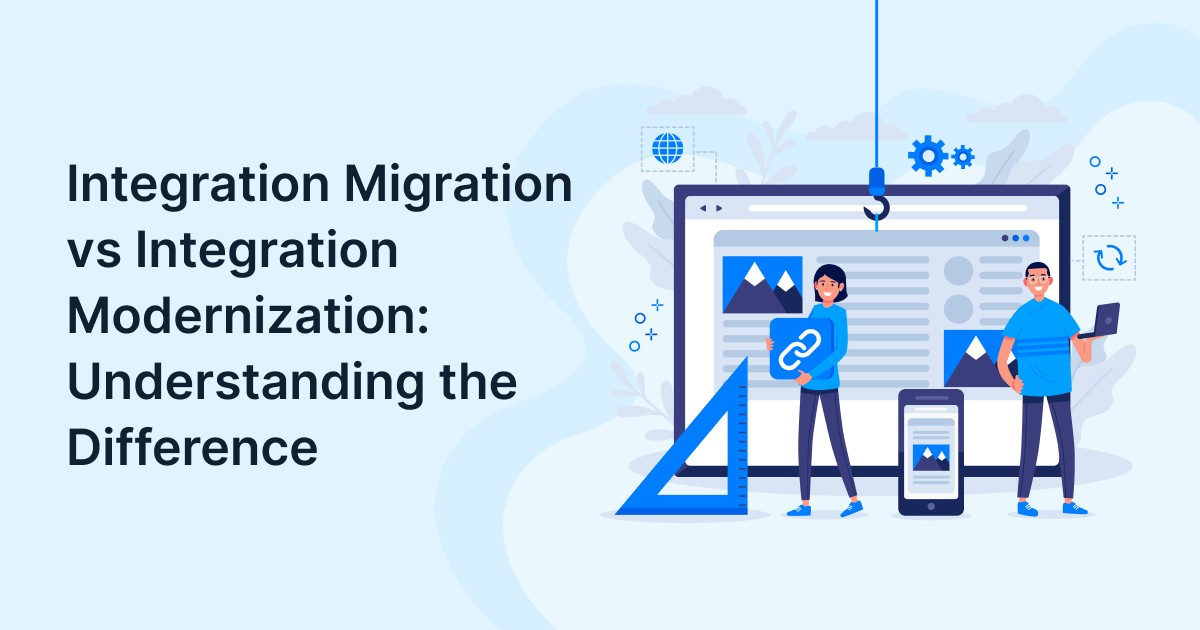
To build a future-ready digital ecosystem, organisations need to understand that Integration Migration and Integration Modernization are not the same. Integration Migration focuses on moving integrations from one platform to another, while Integration Modernization transforms integration architecture, technologies & processes to improve scalability, agility, and long-term business value. Migration may be part of modernization, but it is not modernization itself.
As enterprises accelerate cloud adoption, AI initiatives, automation programmes, and digital transformation projects, integration has become one of the most critical components of business success. Yet many leaders still use the terms Integration Migration and Integration Modernization interchangeably.
This misunderstanding often leads to projects that successfully move integrations to new platforms but fail to deliver the flexibility, scalability & operational improvements that modern businesses require.
Organisations investing in system integration services often begin with platform migration but soon realise that long-term success requires a broader modernization strategy. This is where comprehensive integration solutions become essential for transforming legacy integration environments into agile, future-ready ecosystems.
In this guide, we’ll examine the key differences between Integration Migration and Integration Modernization, when businesses should prioritise each approach & how both fit into a successful enterprise integration strategy.
Summary
- Integration Migration focuses on moving integrations from one environment to another.
- Integration Modernization focuses on redesigning integrations for future business needs.
- Migration is typically a tactical initiative.
- Modernization is a strategic transformation initiative.
- Cloud migration alone does not mean modernization.
- Most enterprises require both migration and modernization.
- Successful Enterprise Integration programmes align migration decisions with long-term modernization goals.
What Is Integration Migration?
To maintain operational continuity while upgrading technology platforms, organisations need to move existing integrations from one environment to another without disrupting business processes.
Integration Migration refers to the transfer of integration assets, workflows, APIs, middleware configurations & data connections from one platform or environment to another.
Common examples include –
- Moving from on-premises middleware to cloud integration platforms
- Migrating legacy ESB solutions
- Re-platforming integration workloads
- Consolidating multiple integration tools into a unified environment
- Transitioning integrations to SAP BTP or similar cloud platforms
The goal of migration is relatively straightforward: preserve existing functionality while changing the underlying platform.
For example, organisations embarking on SAP integration transformations typically begin with migration activities before considering broader modernization objectives. This is why planning becomes critical, as discussed in our guide to the SAP BTP Migration Roadmap.
Drive Digital Innovation & Transform Your Business
Struggling to find tailored IT solutions that truly accelerate your digital transformation journey? Partner with LedgeSure to unlock the true potential of technology.
What Is Integration Modernization?
To support innovation, scalability & future growth, organisations need to redesign integration ecosystems using modern architectures and technologies rather than simply relocating existing integrations.
Unlike migration, Integration Modernization focuses on transformation.
It involves rethinking how applications, data, APIs & processes interact across the organisation.
Modernization initiatives often include –
- API-led connectivity
- Event-driven architectures
- Cloud-native integration platforms
- Microservices enablement
- Real-time data synchronisation
- Low-code integration capabilities
- Enhanced governance and monitoring
The objective is not simply to run integrations on newer technology, but to create a more efficient and scalable Enterprise Integration environment.
This distinction is critical because many enterprises mistakenly believe they have modernised their environment after completing a migration project.
Industry Insight
According to IBM’s 2024 CEO Study, 64% of CEOs believe the pace of technological change is outstripping their organisation’s ability to adapt, increasing pressure on businesses to modernise legacy systems, applications & integration architectures.
Integration Migration vs Integration Modernization: What Are the Key Differences?
To choose the right approach, organisations need to understand that Integration Migration and Integration Modernization may work together, but they solve different business problems and deliver different long-term outcomes.
| Comparison Area | Integration Migration | Integration Modernization |
| Primary Goal | Move existing integrations to a new platform or environment while maintaining current functionality. | Redesign integration architecture to improve agility, scalability & business value. |
| Business Focus | Ensures operational continuity and platform upgrades. | Enables digital transformation, innovation, and future readiness. |
| Scope of Change | Usually limited to moving integrations, workflows, and configurations. | Involves changes to architecture, processes, governance & integration patterns. |
| Technology Impact | Existing integration logic typically remains unchanged after migration. | Introduces modern technologies such as APIs, microservices, event-driven architecture & cloud-native services. |
| Approach | “Lift-and-shift” or replatforming focused. | Optimisation and transformation focused. |
| Technical Debt | May retain legacy integration challenges and complexity. | Actively reduces technical debt by replacing outdated integration approaches. |
| Cloud Adoption | Frequently involves moving integrations to a cloud platform. | Uses cloud capabilities strategically to improve performance, flexibility & scalability. |
| Operational Efficiency | Provides infrastructure and maintenance improvements. | Improves automation, monitoring, governance & overall operational performance. |
| Data & Connectivity | Existing data flows generally remain the same. | Enables real-time data exchange, API-led connectivity & seamless system interactions. |
| Scalability | Delivers moderate scalability improvements depending on the platform. | Designed specifically to support long-term growth and changing business requirements. |
| Implementation Timeline | Usually shorter and focused on transition activities. | Often phased over time as part of a broader transformation roadmap. |
| Business Value | Helps organisations remain supported on modern platforms. | Creates measurable value through innovation, agility, faster time-to-market, and enhanced customer experiences. |
| Risk Profile | Lower risk because existing processes remain largely unchanged. | Higher complexity but greater long-term return on investment. |
| Ideal Use Case | When systems are approaching end-of-life or cloud migration is required. | When legacy integrations are limiting growth, innovation, or digital transformation initiatives. |
The simplest way to understand the difference is this – Migration changes where integrations run. Modernization changes how integrations work.
Why Is Cloud Migration Not the Same as Integration Modernization?
To avoid expensive transformation mistakes, organisations must recognise that moving integrations to the cloud does not automatically modernise them.
A common scenario looks like this –
Before Migration
- Legacy ESB platform
- Point-to-point integrations
- Manual monitoring
- Limited governance
After Migration
- Cloud-hosted ESB
- Same integration architecture
- Same monitoring processes
- Same governance challenges
While the environment has changed, the integration model remains largely unchanged.
In contrast, Integration Modernization would typically involve:
- API-based integration layers
- Automated monitoring
- Event-driven processing
- Improved governance frameworks
- Cloud-native integration design
This difference explains why many enterprises continue to struggle after migration projects despite significant investments.
| 💡 Did You Know?
Research from IBM’s Cost of a Data Breach Report found that organisations with mature cloud and integration capabilities reduced breach-related costs significantly compared to less mature environments. Modern integration architectures contribute to improved visibility and governance. |
Which Approach Should Enterprises Prioritise?
To maximise business value, organisations should determine whether their primary challenge is technology replacement or integration transformation.
Choose Integration Migration when –
- Existing platforms are reaching end-of-life.
- Vendor support is ending.
- Infrastructure costs are rising.
- Cloud adoption is the immediate objective.
- Current integrations still support business requirements.
Choose Integration Modernization when –
- Legacy integrations limit innovation.
- Integration complexity is growing rapidly.
- AI and automation initiatives are expanding.
- Real-time business processes are required.
- Technical debt is becoming a major challenge.
In reality, most enterprises ultimately require both.
Why Are Enterprises Increasingly Investing in Integration Modernization?
To remain competitive in a digital-first economy, businesses need integration environments that support constant change, rapid innovation & scalable growth.
Enterprise technology ecosystems are becoming more complex every year. Modern organisations manage –
- Cloud applications
- Legacy systems
- Customer platforms
- ERP environments
- AI services
- Analytics tools
- Partner ecosystems
Traditional integration approaches were not designed to support this level of complexity. As a result, many organisations are prioritising Integration Modernization programmes to improve –
Agility
Modern architectures make it easier to launch new applications and services.
Scalability
Cloud-native integrations scale with business growth.
Governance
Modern integration platforms provide centralised visibility and control.
Innovation
API-first approaches simplify digital transformation initiatives.
However, many modernization projects fail because organisations view them purely as technology upgrades. Our article on Integration Modernization Mistakes and How to Avoid Them explores this challenge in greater detail.
Empower Your Workforce with AI & Automated Innovations
Want to boost efficiency and reduce costs? Explore how LedgeSure’s AI-driven solutions simplify workflows and drive real outcomes.
How Can Businesses Align Migration and Modernization Successfully?
To achieve sustainable transformation, businesses should treat migration as a stepping stone within a larger modernization strategy.
A practical approach includes –
- Assess the Current Integration Landscape
Identify:
- Existing integrations
- Middleware dependencies
- API usage
- Security requirements
- Business-critical workflows
- Prioritise Migration Needs
Address –
- End-of-life systems
- Unsupported platforms
- Costly environments
- Define Modernization Objectives
Determine whether the organisation requires –
- Greater agility
- Improved scalability
- Better governance
- Real-time integrations
- AI readiness
- Implement a Phased Roadmap
Modernization should occur incrementally, reducing risk while delivering measurable value. Enterprises pursuing large-scale transformation often follow structured roadmaps similar to the approach outlined in our Integration Modernization Roadmap for Large Enterprises.
Similarly, businesses modernising broader technology ecosystems should evaluate how integration transformation aligns with cloud adoption plans. Our guide on Cloud Migration Strategies to Modernize Enterprise Workloads explores this relationship further.
This mindset is becoming increasingly important as enterprises invest in AI, automation, and digital transformation initiatives.
For readers seeking a deeper framework, future internal linking can be added naturally to our upcoming pillar resource: Integration Migration and Modernization: The Complete Enterprise Guide.
Conclusion
Understanding the difference between Integration Migration and Integration Modernization is essential for creating a future-ready Enterprise Integration environment.
While migration focuses on moving integrations to a new platform, modernization focuses on transforming integration capabilities to support long-term business growth. Both have value, but they deliver very different outcomes.
The most successful organisations do not stop at migration. They use migration as a foundation for broader modernization initiatives that reduce technical debt, improve agility, strengthen governance, and support innovation.
Whether you’re replacing legacy middleware, planning a cloud migration, or developing a long-term integration strategy, the right approach depends on your business objectives and future-state vision.
Ready to build a modern integration ecosystem? Connect with the experts at Ledgesure and discover how tailored integration modernization and migration strategies can accelerate your digital transformation journey.